
Product Strategy
Why product strategy matters?
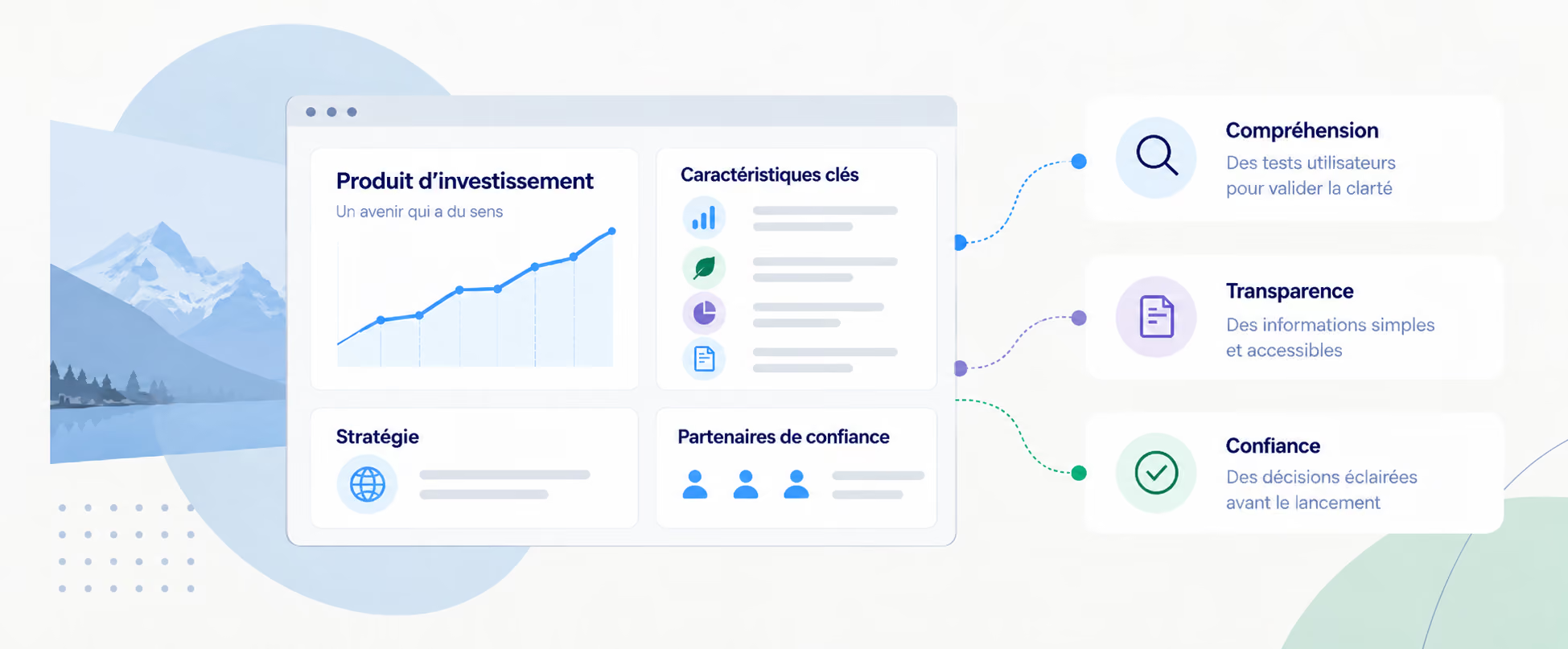
Your product is evolving, but the direction is getting blurry. We clarify who it’s for, how it’s structured, and how trade-offs are made - so stakeholders align, navigation stays coherent, and decisions stay consistent.

Clarify the audience and primary need
Product strategy helps you focus on what matters: who you’re designing for, which need comes first, and what value should guide day-to-day choices - without spreading your efforts too thin.

Keep navigation coherent as you scale
You restore stable reference points: clear information, consistent labels, and smooth journeys - even as the product expands.

Align everyone on one direction
A shared framework makes priorities and trade-off criteria explicit. Decisions move faster, and product, design, and tech stay aligned on the same vision.
When should you start product strategy work?


What we do in practice
How we work with you
Here are the key stages of the engagement. They adapt and can expand based on your context, constraints, and the decisions to be made.
Together, we clarify objectives, audience, constraints, and the decisions to resolve. This sets the course: what the product should enable, for whom, and in what order.
We create a shared language by making concepts, relationships, and operating rules explicit - so the logic stays solid and durable, even as the product evolves.
We define content and feature organisation and the navigation principles behind them. Signposts, hierarchy, and labels are refined to support the key moments in the journey.
You leave with clear priorities, recommendations, and a plan. Quick wins and larger workstreams are separated, with a decision framework to guide the roadmap.

Discover our projects